Author Shad Qazaz Brings Kurdish Mythology and Folklore to International Readers
The English publication of Children of Zagros reflects continuing efforts by diaspora authors to preserve regional heritage and bring Kurdish literary narratives to wider international audiences.
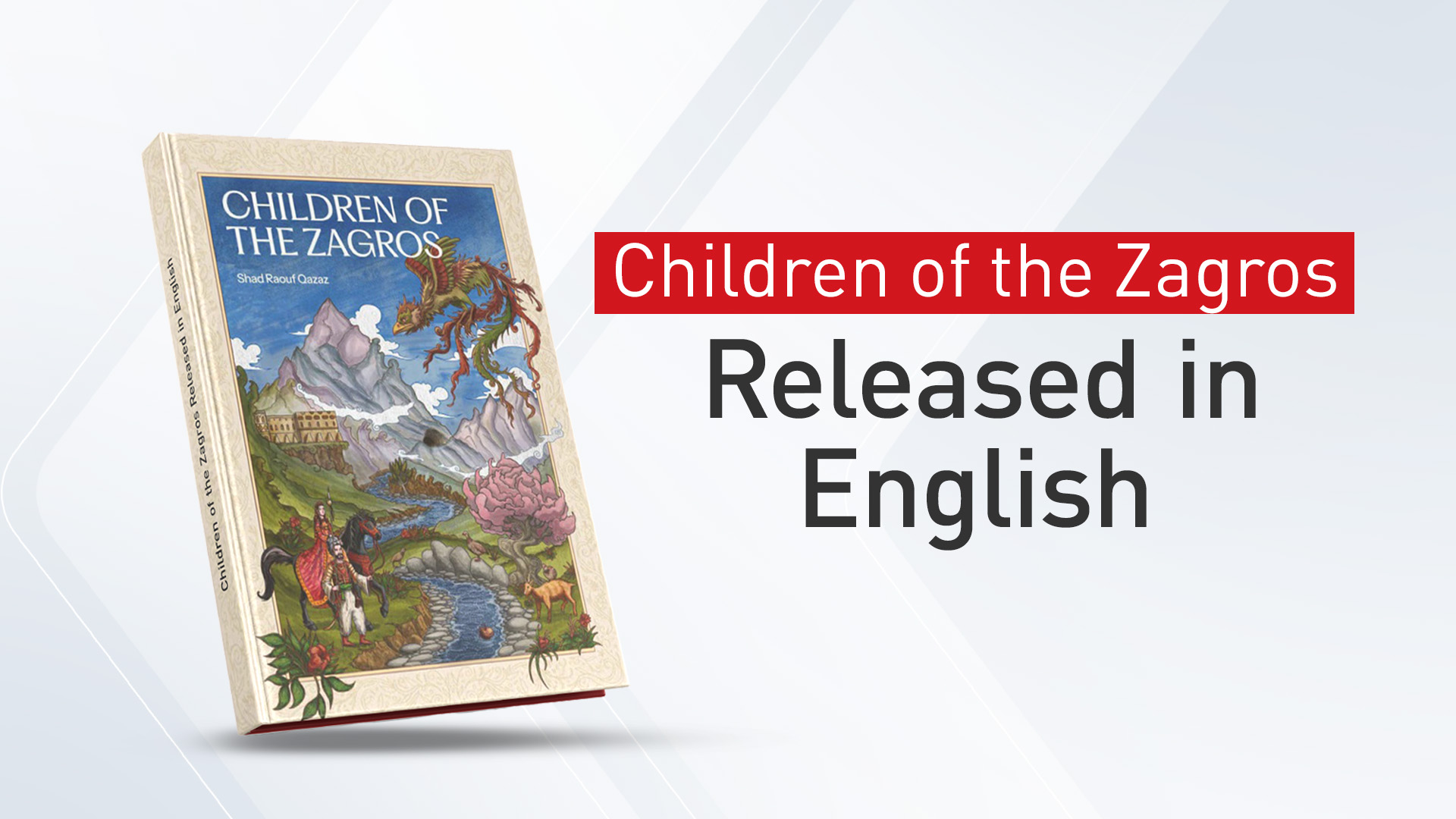
ERBIL (Kurdistan24) - Kurdish novelist Shad Raouf Qazaz has announced the release of the English-language edition of his novel, Children of the Zagros. The author, originally from the city of Ranya and currently residing in the Netherlands, initially wrote and published the work in Dutch.
According to a recent publication announcement, the novel has now been made available to global English-speaking audiences, representing a concerted effort to introduce Kurdish mythological narratives to a broader international readership.
The English publication of Children of the Zagros is viewed as a significant development for regional literary representation.
Qazaz said that the translation serves to bridge a cultural gap, providing English readers with access to the complex folklore and ancient legends inherent to the Zagros mountain region.
The translation and international distribution of the novel highlight the ongoing endeavor by diaspora authors to preserve and share the Kurdish cultural identity across linguistic borders.
The Publication Announcement
The release of the English edition marks a new phase for the novel, which has garnered a dedicated following since its original publication.
According to the report, Qazaz stated that the English version of Children of the Zagros takes a deliberate step toward acquainting international readers with the depth of Kurdish storytelling.
The author noted that the narrative is structured as a legendary tale intended to unlock the "ancient secrets of the Zagros."
In discussing the creative process, Qazaz told Kurdistan24 that writing the original manuscript in Dutch afforded him a degree of imaginative freedom. However, he acknowledged that operating in a European language occasionally distanced him from exclusively Kurdish historical sources.
The author explained that while the novel is designed to function as an independent and accessible fantasy epic for any international reader, its content resonates with a deeper cultural dimension for Kurdish audiences.
He noted that certain scenes, which might appear unusual to non-Kurdish readers, are readily understood by Kurds due to their deep roots in regional folklore and traditional thought.
Themes and Cultural Context
The narrative framework of Children of the Zagros relies heavily on the integration of established regional mythology.
According to the publication announcement, the novel weaves together well-known mythical figures such as the Simurgh, Shamaran, and Zahak.
The core of the story revolves around the journey of a Kurdish princess named Runak, who is unexpectedly designated as the heir to the throne, bypassing her three older brothers.
The report detailed that following this unprecedented royal decree, Princess Runak disappears behind the closed doors of the palace.
This event serves as the catalyst for an expansive journey characterized by political conspiracies, encounters with mythical creatures, and the unraveling of historical secrets.
However, Qazaz emphasized that the novel is intended to be more than a conventional heroic fantasy.
The author stated that the story attempts to present its characters with a profound human dimension. Qazaz noted that the protagonist is not portrayed merely as a passive victim of external forces; rather, she eventually recognizes her own complicity and agency within the unfolding events.
Literature and Cultural Identity
A prominent thematic element within the novel is its exploration of gender roles, an aspect deeply connected to the region's cultural dynamics.
According to the report, Qazaz identified the portrayal of women as one of the distinguishing features of the book. The author explained that the women in his narrative possess a "secret power," possessing the ability to alter the trajectory of events without needing to speak explicitly.
Qazaz noted that this dynamic reflects a broader societal reality.
He stated that in Kurdish culture, while women may not always be highly visible at the forefront of public life, they frequently act as the decisive force that determines the direction of critical events.
The author's research into Kurdish history and mythology, which he began in 2019, deeply informs the novel's cultural authenticity.
By centering these themes, Children of the Zagros utilizes the medium of speculative fiction to preserve the cultural memory and complex social structures of the Kurdish people.