Trump Says He Would Like to Meet Iran’s Supreme Leader as Gulf Tensions Escalate
UAE calls for unified GCC response after attacks on Kuwait and Bahrain
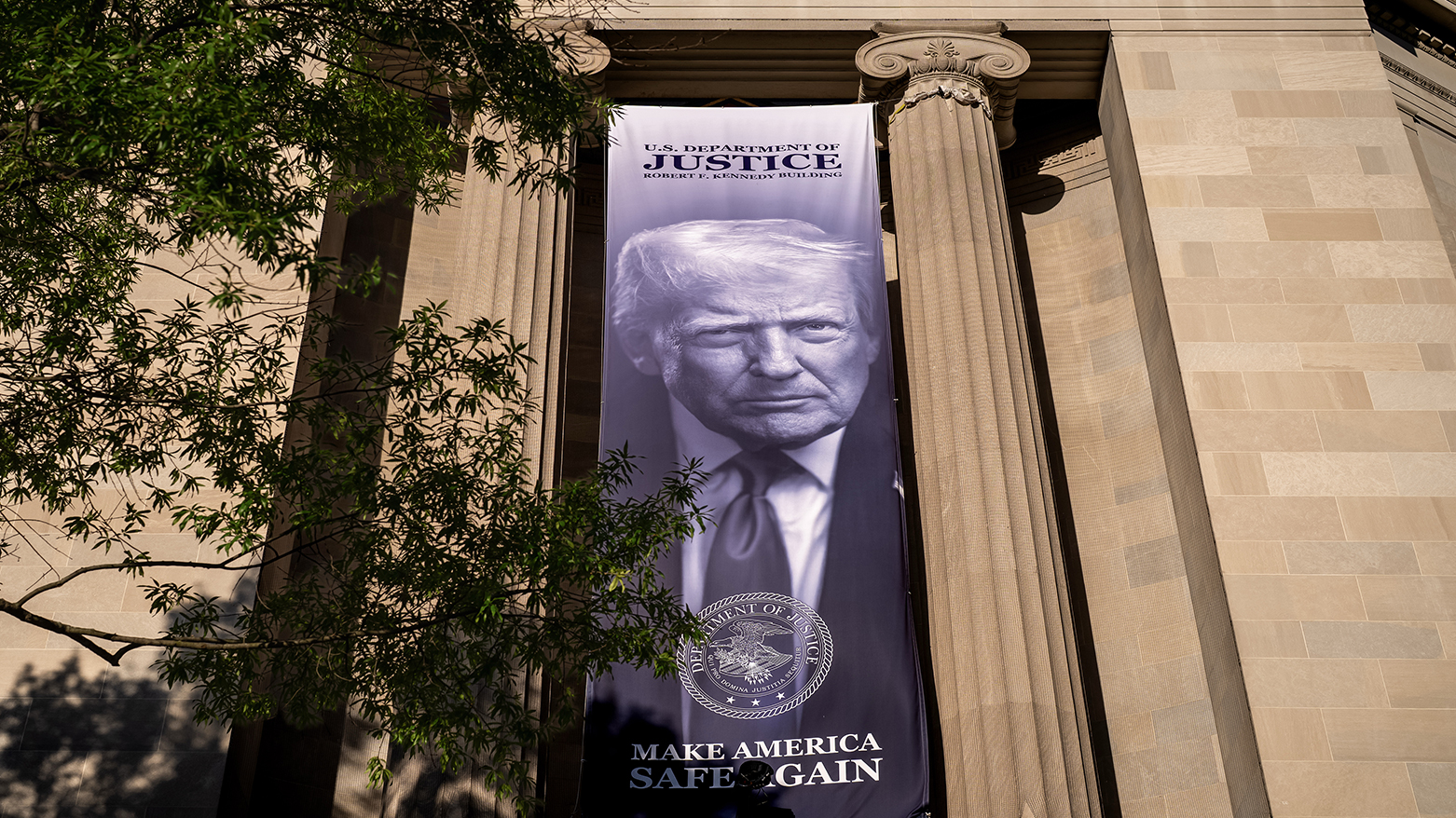
ERBIL (Kurdistan24) — U.S. President Donald Trump said he would like to meet Iran’s Supreme Leader, Ayatollah Mojtaba Khamenei, amid continued diplomatic efforts to ease tensions in the Gulf following a new wave of attacks involving Iran, Kuwait, and Bahrain.
In an interview published Wednesday by the New York Post's “Pod Force One,” Trump said a meeting with Khamenei could take place in the future.
“I would like to meet him, and we probably will meet at some point, depending on how it all works out,” Trump said.
The remarks came as regional tensions remained high following attacks on Kuwait and Bahrain that Gulf states and their allies have blamed on Iran.
On Wednesday, senior Emirati official Anwar Gargash called for a united response from Gulf Cooperation Council (GCC) members, warning that the latest attacks threaten the security of the entire region.
“In light of Iran's repeated aggression against the brotherly states of Kuwait and Bahrain, a firm, unified and cohesive Gulf stance is imperative,” Gargash said in a post on X.
“No Gulf state should be left to face these attacks alone, because the security of the Gulf Cooperation Council states is interconnected, their interests are shared, and their destiny is one and the same,” he added.
Gargash stressed that the attacks were not directed solely at individual countries.
“This aggression does not just target one country, it targets us all,” he said.
Meanwhile, Iran’s Islamic Revolutionary Guard Corps (IRGC) claimed responsibility for missile and drone strikes against U.S. military facilities in Kuwait and Bahrain, describing the attacks as retaliation for recent U.S. actions against Iranian assets.
“In response to this aggression, the Ali Al Salem Air Base in Kuwait, which hosts helicopters, as well as the headquarters of the U.S. Fifth Fleet in Bahrain, were targeted with missiles and drones by the Guards' forces,” the IRGC said in a statement published on its official Telegram channel.
The claims followed reports of an Iranian attack on Kuwait International Airport earlier on Wednesday.
Kuwaiti authorities said the strike forced the temporary closure of the airport and initially reported one fatality. An airport source later identified the deceased as an Indian national.
The Kuwaiti Health Ministry subsequently reported that at least 63 people were injured in the attack.
Health Ministry spokesperson Abdullah al-Sanad said 25 ambulances were dispatched to the airport and that victims were transferred to hospitals across the country.
“Sixty-three injured individuals were received and distributed among hospitals,” Sanad said, noting that several suffered serious wounds, including head injuries, cerebral hemorrhages, amputations, and injuries caused by explosions.
Despite the attack, Kuwait moved to restore air traffic later in the day.
The General Authority of Civil Aviation announced that flights operated by the country's national carrier, Kuwait Airways, would resume from Kuwait International Airport on Wednesday.
The latest developments underscore the fragile security situation in the Gulf, where ongoing tensions between Iran, the United States, Israel, and regional allies continue to raise concerns about broader instability, even as diplomatic contacts and ceasefire efforts remain underway.