Islamic Resistance in Iraq Rejects Disarmament, Vows to Expand Arsenal
The Islamic Resistance in Iraq says its weapons are non-negotiable, pledges to strengthen its military capabilities, and challenges Baghdad's campaign to consolidate all arms under exclusive state authority.
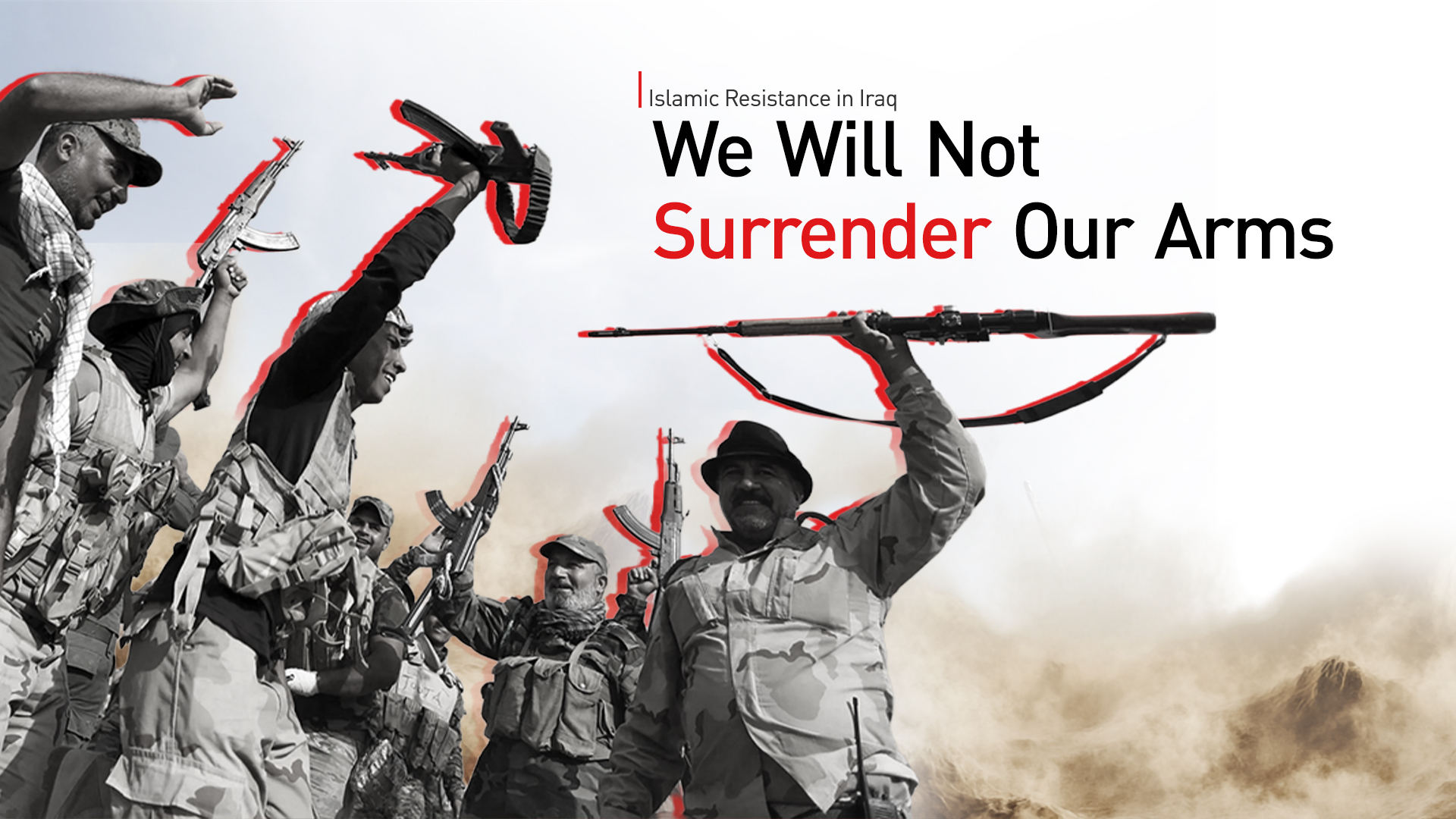
ERBIL (Kurdistan24) - The Islamic Resistance in Iraq has issued one of its strongest public rejections yet of Baghdad's campaign to place all weapons under exclusive state authority, declaring that it will never surrender its arsenal, describing armed resistance as an enduring ideological commitment, and pledging to further strengthen its military capabilities despite mounting government pressure for disarmament.
In a statement released late Friday, the group said its weapons were "never subject to compromise," characterizing them as a foundational doctrine rather than a negotiable political issue.
It added that it is pursuing both "quantitative and qualitative" improvements to its military and security capabilities while raising the readiness of its forces to confront what it described as threats posed by Israel and the United States.
The declaration was reinforced by Abu Hussein al-Humaidawi, Secretary-General of Kataeb Hezbollah, who delivered an uncompromising message to Iraqi authorities, saying government officials must "comply with the Resistance."
He said the organization was established under the guidance of Iran's late supreme leader and remains committed to that course, while arguing that recent large funeral gatherings reflected broad public support for the armed resistance and its continued possession of weapons.
The statements come at a pivotal moment in Iraq's security debate, as Prime Minister Ali Faleh al-Zaidi's government accelerates efforts to consolidate all weapons under state authority and reshape the country's security architecture before the scheduled completion of the International Coalition's withdrawal on Sept. 30.
Over recent weeks, Baghdad has presented the consolidation of weapons under state control as a central pillar of its broader agenda of institutional reform, sovereignty, and national stability.
The government has repeatedly emphasized that decisions concerning war and peace belong exclusively to Iraq's constitutional institutions and that armed force should remain solely under official command.
Read More: Iraqi Government Reaffirms Commitment to Security, Sovereignty, and State Monopoly on Arms
Several influential armed factions have responded by announcing plans to integrate into state institutions or relinquish their weapons.
Against that backdrop, the Islamic Resistance's latest declaration stands apart, openly rejecting the trajectory pursued by both the government and several prominent Iraqi groups, while introducing a fresh point of political tension as Baghdad seeks to strengthen its authority over the country's fragmented security landscape.
Read More: Kata'ib Imam Ali to Surrender Weapons, Exit PMF Structure
Unlike groups that have framed integration into state institutions as compatible with their ideological principles, the Islamic Resistance portrayed retaining its weapons as inseparable from its identity.
Its statement emphasized that the organization is not merely preserving its current military posture but actively investing in expanding and modernizing its capabilities.
That message signals a determination to remain an independent armed actor even as the Iraqi government pursues a nationwide effort to centralize military authority.
Al-Humaidawi's accompanying remarks further underscored that position. By urging officials to "comply with the Resistance," he presented the movement not as an organization expected to adapt to evolving state policy but as a force whose legitimacy it believes the government should recognize.
Read More: Iraqi Resistance Group Rejects Calls for Disarmament, Threatens Action Against Israel
His comments echoed recent statements by Kataeb Hezbollah rejecting calls to abandon armed resistance.
Read More: Kataeb Hezbollah Vows to Continue Armed Resistance as Iraq Pushes State Control Over Weapons
Earlier, the group's security official, Abu Mujahid al-Assaf, maintained that armed resistance remained a continuing obligation and indicated the organization would continue its military role even as some allied factions considered deeper integration into state structures.
The Islamic Resistance's latest declaration contrasts sharply with a series of developments that have appeared to strengthen Baghdad's campaign to establish a state monopoly over weapons.
Read More: Iraqi Resistance Front Rejects Disarmament Following Sadr Integration Move
Prime Minister al-Zaidi has repeatedly argued that restricting weapons to state institutions is no longer simply a political aspiration but an active government policy.
During a meeting with European Union ambassadors late last month, he said the process had already begun and would continue alongside broader efforts aimed at strengthening governance, combating corruption, and reinforcing Iraqi sovereignty.
Those efforts have been accompanied by a Sept. 30 timetable for completing the process of bringing weapons under state authority while coinciding with the scheduled withdrawal of Coalition forces from Iraq.
Momentum behind the initiative increased after influential Shiite cleric Muqtada al-Sadr ordered Saraya al-Salam to integrate into Iraq's official security institutions and transfer its weapons to the state.
Read More: Muqtada al-Sadr Orders Saraya al-Salam’s Integration Into Iraqi State
The government subsequently established a joint committee with representatives of Sadr's movement to oversee the transition.
Other groups have since announced similar moves.
Kata'ib Imam Ali declared it would surrender its weapons, sever its affiliation with the Popular Mobilization Forces (PMF), and begin integrating its personnel into state institutions under government supervision.
Asa'ib Ahl al-Haq likewise announced plans to transfer its personnel and assets into the Iraqi military command structure through a dedicated transition committee.
Government officials have consistently framed those developments as evidence of growing support for consolidating security authority under the Iraqi state.
Read More: Iraq Faces New Security Test as Key Militia Signals Intent to Disarm and Integrate
Prime Minister al-Zaidi has linked the initiative to broader efforts to strengthen sovereignty, while military spokesman Sabah al-Numan has described limiting weapons to official institutions as a national security strategy that "must be implemented," stressing that the state should remain the sole authority possessing force and decision-making power.
The latest statement from the Islamic Resistance diverges from that direction by asserting that its military role remains both legitimate and indispensable.
The contrasting positions illustrate the competing visions emerging within Iraq's network of armed factions.
Read More: Iraqi Military Spokesman: Weapons Must Remain Under State Control
While several organizations have concluded that integration with state institutions represents the appropriate path forward, others continue to argue that independent armed resistance remains necessary despite Baghdad's push to centralize security authority.
The debate carries implications extending beyond Iraq's internal political landscape. Analysts have argued that the government's ability to establish an exclusive monopoly over force is closely tied to its broader reform agenda and efforts to attract long-term foreign investment.
A recent analysis by the Foundation for Defense of Democracies, authored by research analyst Bridget Toomey, argued that Iraq's evolving economic partnership with the United States and its ambitions to attract international investment will depend in part on whether the government can demonstrate effective control over armed groups operating outside formal state command structures.
Read More: Can a Business-First Partnership Work in Iraq if the Guns Remain Unchecked?
Against that backdrop, the Islamic Resistance's declaration represents more than a rejection of disarmament.
It underscores the continuing divisions over the future of Iraq's security order at a time when Baghdad is seeking to consolidate state authority, complete the Coalition withdrawal timetable, and persuade both domestic and international partners that decisions over the use of force rest exclusively with the Iraqi state.
|
Summary The Islamic Resistance in Iraq rejected disarmament, calling its weapons a permanent doctrine while pledging to expand its military capabilities. The declaration challenges Baghdad's campaign to place all weapons under state control ahead of a Sept. 30 security deadline. |