Syria’s Al-Sharaa Meets US Special Envoy in Damascus Amid Renewed Diplomatic Engagement on Syria
Syrian President Ahmed al-Sharaa met US envoy Thomas Barrack in Damascus, stressing unity, dialogue, and cooperation, as parallel talks in Erbil highlighted US-Kurdish engagement on stability and Syria’s future.
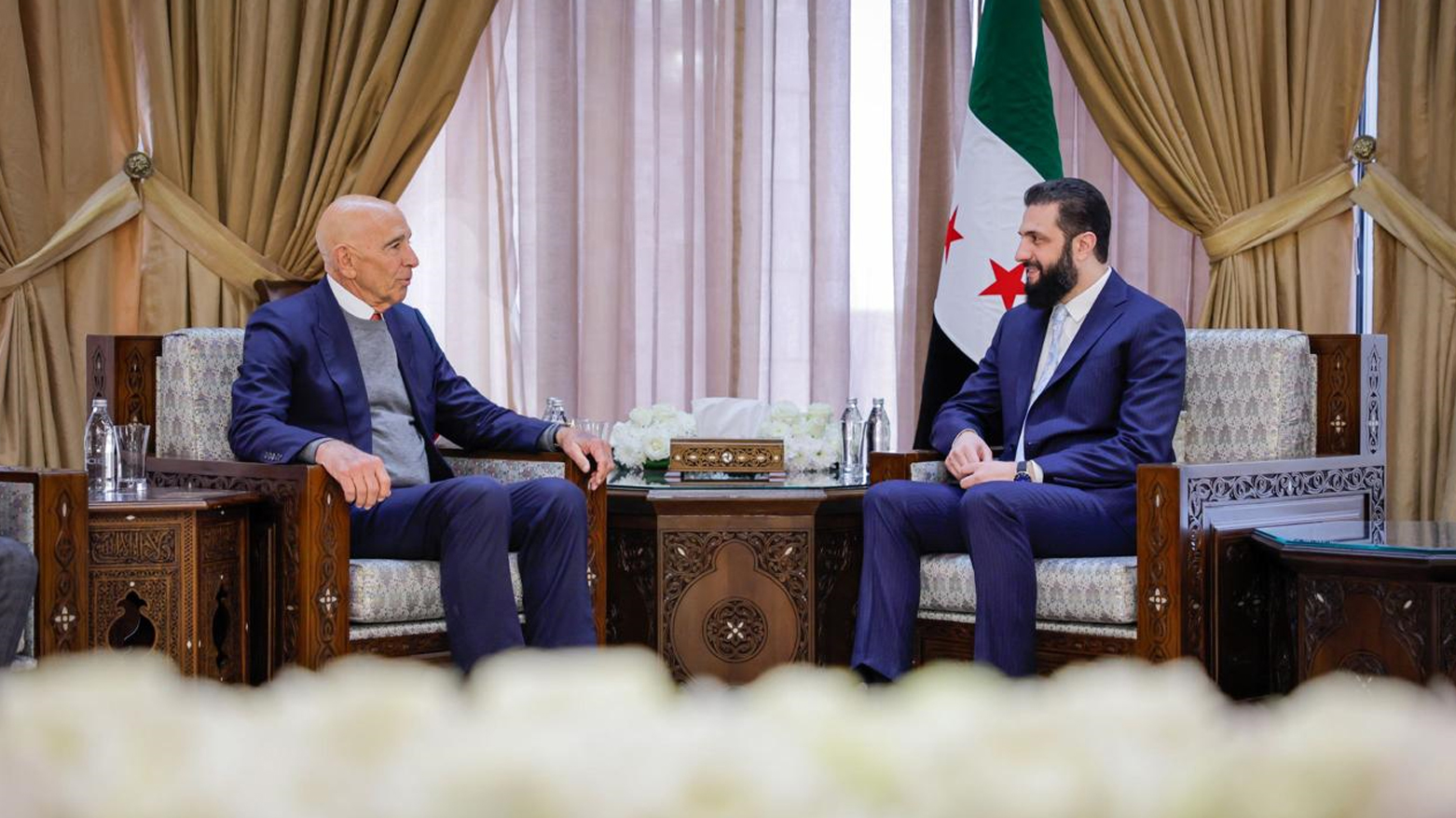
ERBIL (Kurdistan24) - In a fresh diplomatic development reflecting intensified international engagement on Syria, Syrian President Ahmed al-Sharaa received the United States’ special envoy to Syria, Thomas Barrack, in Damascus, emphasizing national unity, dialogue, and cooperation at a moment of heightened regional focus on stability and political solutions.
The Syrian presidency announced that President Ahmed al-Sharaa on Sunday received US Special Envoy to Syria Thomas Barrack in Damascus, in the presence of Foreign Minister Asaad Hassan al-Shaibani.
According to the statement, President al-Sharaa affirmed Syria’s unity and sovereignty over its entire territory, stressing the importance of dialogue during the current phase. He underscored the need to build Syria with the participation of all Syrians and highlighted the continuation of coordination efforts in combating terrorism.
The meeting also addressed ways to enhance economic cooperation between Syria and the United States, alongside discussions on the latest regional developments.
Meanwhile, Syrian Information Minister Hamza al-Mustafa said:
We expect an important announcement after 6:00 PM regarding the ongoing consultations on a ceasefire agreement and the full integration of the SDF into Syrian state institutions.
The Damascus meeting came against the backdrop of high-level talks held a day earlier in the Kurdistan Region. On Saturday, President Masoud Barzani hosted a significant meeting in Pirmam, Erbil, bringing together US and Kurdish leaders to discuss the situation in Syria and avenues for peace and stability.
The meeting included Thomas Barrack, US President Donald Trump’s Special Envoy to Syria; Wendy Green, US Consul General in Erbil; General Kevin Lambert, Commander of US Forces in Syria; General Mazloum Abdi, Commander of the Syrian Democratic Forces; and Mohammed Ismail, President of the Kurdish National Council of Syria (KNCS), also known as ENKS.
President Barzani welcomed the participants and expressed appreciation for their efforts to promote peace and prevent further violence under challenging circumstances. He stressed the importance of dialogue, stability, and coexistence as core foundations for what he described as a “new Syria.”
Speaking on behalf of the United States, Ambassador Barrack thanked President Barzani for hosting the meeting and acknowledged his continued role and engagement in supporting the Syrian peace process. Discussions focused on developments in northern Syria and practical steps to ensure regional stability, with an emphasis on cooperation between international actors and Kurdish leadership to advance peaceful solutions and avoid escalation.
Earlier the same day, President Barzani separately received Ambassador Barrack in Pirmam, in a meeting also attended by Kurdistan Region Prime Minister Masrour Barzani. During that meeting, Barrack conveyed President Trump’s greetings and respect to Barzani and expressed appreciation for his role in supporting peace efforts and helping to de-escalate recent tensions in Syria.
According to a statement from President Barzani’s office, the discussions centered on the evolving situation in Syria and recent developments on the ground. Both sides emphasized that resolving Syria’s challenges requires dialogue, mutual understanding, and peaceful approaches rather than confrontation. President Barzani thanked the United States for its efforts in assisting Syrian parties and stressed that safeguarding the political and cultural rights of the Kurdish people must be a fundamental element of any future settlement in Syria.
Taken together, the Damascus and Erbil meetings signal parallel diplomatic tracks centered on dialogue, cooperation, and stability, underscoring renewed efforts by Syrian, Kurdish, and US actors to shape a political path forward amid ongoing regional challenges.