US Envoy Tom Barrack Says Washington Reaffirms Support for SDF–Damascus Integration, Stresses Ceasefire as First Step
US envoy Tom Barrack said Washington reaffirmed support for the Jan. 18 SDF–Damascus integration agreement, stressing that upholding the ceasefire and building trust are essential steps toward stability and Kurdish inclusion in Syria.
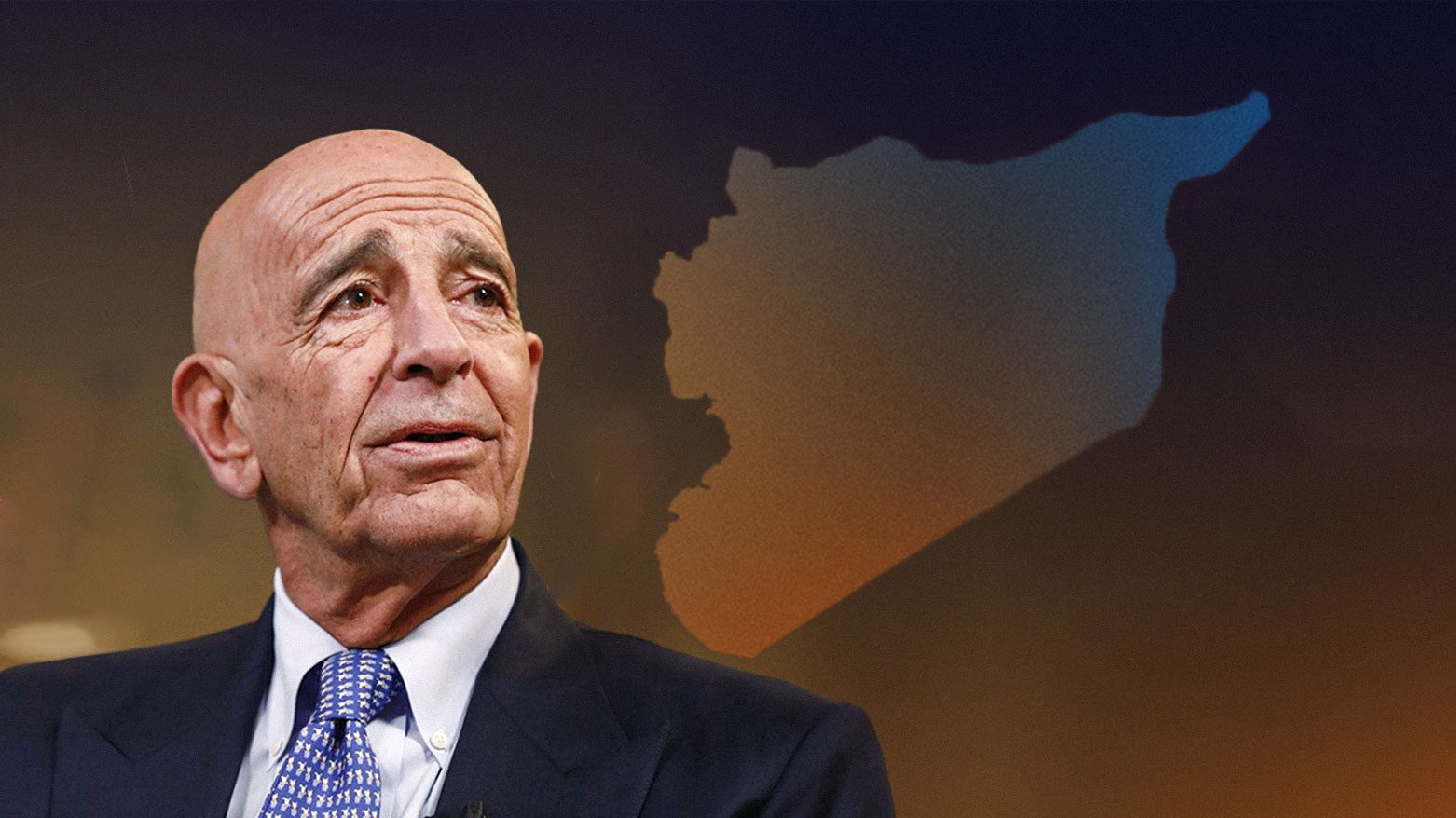
ERBIL (Kurdistan24) - In a carefully worded message signaling Washington’s priorities in Syria’s evolving landscape, US Ambassador to Türkiye and Special Envoy for Syria Tom Barrack said he met with SDF commander to reaffirm American support for an integration process anchored in a ceasefire, dialogue, and confidence-building steps.
On Thursday, Tom Barrack, the United States Ambassador to the Republic of Türkiye and Special Envoy for Syria, announced that he had met with General Mazloum Abdi and Ilham Ahmed.
In a post published on X, Barrack wrote: “We were honored to meet today with General Mazloum Abdi and Ilham Ahmed.”
He said the United States reaffirmed its strong support for and commitment to advancing the integration process outlined in the Jan. 18 agreement between the Syrian Democratic Forces and the Syrian government.
According to Barrack, all parties agreed that the essential first step in this process is the full upholding of the current ceasefire. He added that this would allow the parties to collectively identify and implement confidence-building measures on all sides, with the aim of fostering trust and achieving lasting stability.
Barrack’s remarks come amid broader US messaging that the role of the Syrian Democratic Forces as the primary ground force against ISIS has effectively come to an end, as Syria enters what he described as a fundamentally different political and security phase.
In previous statements published on X, Barrack said the greatest opportunity for Kurds in Syria now lies in a post-Assad transition under the new government led by President Ahmed al-Sharaa, describing it as a pathway toward full integration into a unified Syrian state with citizenship rights, cultural protections, and political participation.
He noted that under Bashar al-Assad’s rule, many Kurds were denied basic rights, facing statelessness, language restrictions, and systemic discrimination. Barrack said the US military presence in northeastern Syria had been justified primarily by the fight against ISIS, during which the Kurdish-led SDF proved to be the most effective ground partner, defeating ISIS’s territorial caliphate by 2019 and detaining thousands of ISIS fighters and their families in prisons and camps, including al-Hol and al-Shaddadi.
At that time, Barrack said, there was no functioning central Syrian state to partner with, describing the Assad regime as weakened and not a viable counterterrorism partner due to its alliances with Iran and Russia.
“Today, the situation has fundamentally changed,” Barrack said, pointing to the emergence of an acknowledged central Syrian government that joined the Global Coalition to Defeat ISIS as its ninetieth member in late 2025, signaling cooperation with the United States on counterterrorism.
According to Barrack, this shift changes the rationale for the US-SDF partnership, as Damascus is now positioned to assume security responsibilities, including control of ISIS detention facilities and camps. He said Washington is actively facilitating this transition rather than prolonging a separate SDF role.
Barrack said the United States has engaged extensively with both the Syrian government and SDF leadership to secure the Jan. 18 integration agreement and to establish a clear pathway for its peaceful implementation. He explained that the agreement provides for the individual integration of SDF fighters into the national military, the handover of key infrastructure such as oil fields, dams, and border crossings, and the transfer of control over ISIS prisons and camps to Damascus.
He described the individual integration of fighters as one of the most contentious issues but stressed that Washington has no interest in a long-term military presence. Instead, he said, the US priority is defeating ISIS remnants, supporting reconciliation, and advancing national unity without endorsing separatism or federalism.
Barrack argued that integration offers Kurds prospects that go beyond the semi-autonomy held during the civil war, including full citizenship rights, recognition as an integral part of Syria, constitutional protections for Kurdish language and culture, and participation in governance.
He acknowledged that risks remain, including fragile ceasefires and occasional clashes, but said the United States is pushing for safeguards on Kurdish rights and continued counter-ISIS cooperation. “The alternative—prolonged separation—could invite instability or ISIS resurgence,” Barrack said, describing US-backed integration as the strongest chance yet for Kurds to secure lasting rights and security within a recognized Syrian state.
Barrack’s meeting with Mazloum Abdi and Ilham Ahmed underscores Washington’s push to anchor Syria’s transition in a sustained ceasefire and an integration process it views as central to stability, security, and the future status of Kurds within the Syrian state.