Iraq’s Political Alchemy: Late-Night Deals and the Chemistry of Fragile Power
Iraq’s Shiite Coordination Framework is weighing a last-minute compromise to name Bassem al-Badri as prime minister, offering the incumbent’s bloc five ministries to end a deadlock. The push comes as fatal militia clashes in Karbala highlight the country’s fragile security environment.
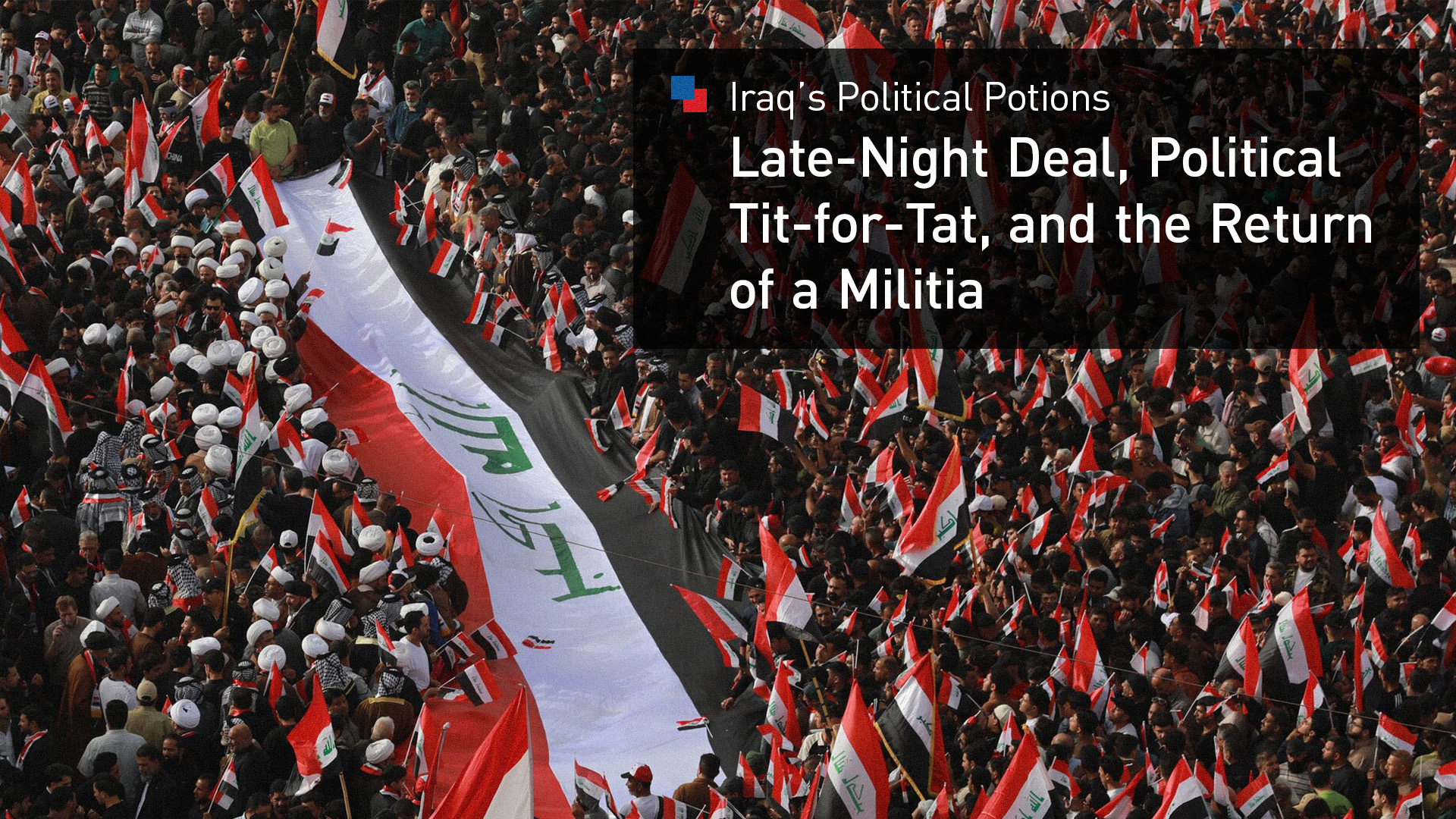
ERBIL (Kurdistan24) - On the final day of the constitutional deadline to designate a new prime minister, Iraq’s Shiite Coordination Framework (SCF) is weighing a newly brokered compromise to resolve a persistent political deadlock, while parallel factional violence in Karbala has prompted the National Shiite Movement (previsouly known as the Sadr Movement)’s military wing to suspend all local operations.
The dual developments on Saturday, highlight the fragility of Iraq’s institutional transition.
A late-night agreement proposed by the State of Law Coalition seeks to bypass an entrenched rivalry between senior political leaders by nominating Bassem al-Badri for the premiership. Concurrently, a fatal clash involving a rogue splinter group underscores the localized security risks complicating the broader national power structure.
Both events occur under mounting internal and international pressure following the recent election of Nizar Amedi as the President of the Republic.
The Compromise Proposal and Power Distribution
Late Friday night, a pivotal meeting convened at the residence of Nouri al-Maliki, leader of the State of Law Coalition, to formulate a viable government structure and determine the distribution of ministerial portfolios.
According to an informed political source, the gathering included prominent figures such as Aamer al-Faiz, Mohsen al-Mandalawi, and Abu Ala al-Wala'i.
The primary outcome of the session was a proposal, scheduled to be formally presented at a Shiite Coordination Framework meeting on Saturday night, nominating Bassem al-Badri for the Prime Minister’s office.
To secure consensus, the proposal outlines significant institutional concessions directed at the Construction and Development Coalition, led by Mohammed Shia al-Sudani.
In exchange for supporting Badri’s nomination, Sudani’s coalition would receive the position of Deputy Prime Minister alongside five ministerial portfolios. Crucially, the agreement stipulates that one of these five ministries must be a "sovereign" ministry, ensuring the Construction and Development Coalition retains substantial executive leverage.
Beyond the distribution of offices, the participants at the Friday night meeting established a unified policy understanding.
They agreed to block any initiatives aimed at reopening the files of previous governments, signaling a prioritization of immediate political stability over retrospective administrative investigations.
The coalition leaders also pledged to focus the incoming government's mandate on improving Iraq's diplomatic and economic relations with countries in the region.
Chronology of Gridlock and Rejected Candidates
The emergence of the Badri proposal follows an extended period of institutional paralysis within the Shiite Coordination Framework.
The political alliance has repeatedly failed to unify behind a single candidate, a deadlock fundamentally driven by an ongoing conflict between Maliki and Sudani.
Prior to the late-night breakthrough, the Shiite Coordination Framework had convened earlier on Friday at the office of Humam Hamoudi, head of the Islamic Supreme Council, to finalize the nomination process.
During that session, several alternative candidates were introduced, including former Prime Minister Haider al-Abadi, Adnan al-Zurfi, and Mohammed Sahib al-Darraji.
However, the participants at Maliki’s subsequent meeting explicitly declined to support the candidates proposed at Hamoudi’s residence.
The Framework ultimately concluded its Friday session by closing the finalization process until Saturday, issuing no public clarification regarding the ongoing failure to secure an agreement.
This delay marks the culmination of a protracted negotiation cycle.
The Shiite Coordination Framework previously failed to reach a consensus on a prime ministerial candidate during three consecutive meetings held last Saturday, Monday, and Wednesday.
The expiration of the constitutional deadline on Saturday elevates the stakes, compelling the factions to finalize a candidate to avoid a constitutional vacuum following President Amedi’s election.
Security Escalation in Karbala
As political factions negotiated in Baghdad, a severe security incident materialized in the central province of Karbala, underscoring persistent factional volatility.
Armed clashes erupted late Friday night in the Al-Hurr area between members of Saraya al-Salam, the military wing of the National Shiite Movement, and a splinter faction known as "Al-Azhariyyun."
The confrontation resulted in one fatality and left two others wounded. Multiple sources identified the deceased as Mohammed Jamil al-Aboudi, who served as the Security Coordination Official for Saraya al-Salam within the Karbala Brigade.
Following the localized firefight, the gunmen affiliated with Al-Azhariyyun fled the scene to an undisclosed location.
Authorities have not yet announced any arrests in connection with the armed clashes, and the underlying motive for the violence remains unconfirmed.
Institutional Response and Severed Ties
In response to the fatal escalation in Karbala, the high command of Saraya al-Salam initiated immediate containment measures.
The Military Commander, designated as the Jihadist Assistant of the organization, issued an official directive closing all Saraya al-Salam bases and offices across Karbala province and suspending all affiliated activities.
The directive stated that the closures were enacted to preserve public interest, security, and stability in the holy province.
Concurrently, the Saraya al-Salam leadership called upon federal security institutions to enforce the law and implement strict measures to apprehend those responsible for what the statement characterized as a "heinous act."
The clashes bring renewed attention to the contested status of the Al-Azhariyyun group. On Sept. 13, 2024, the National Shiite Movement officially expelled the faction from the operational structure of Saraya al-Salam.
At the time of the expulsion, the movement formally notified federal security institutions that Al-Azhariyyun no longer maintained any affiliation with the National Shiite Movement or its military wing. The 2024 notification explicitly stated that the broader movement bears no responsibility for any actions committed by the splinter group that might disrupt national security.
Origins and Expulsion of Al-Azhariyyun
The clashes in Karbala bring renewed attention to the Al-Azhariyyun group, a faction recently expelled from the Sadrist ranks. According to a Sept. 2024 report by al-Araby al-Jadeed, the group traces its ideological origins to Azhar al-Dulaimi, a former Mahdi Army leader who was killed by U.S. forces in 2007.
The publication noted that al-Dulaimi, a Sunni convert to Shiism known for his ideological strictness and military execution, became a symbolic figure for hardline elements within the Sadrist Movement.
While the faction initially remained loyal to Muqtada al-Sadr, it recently began taking isolationist steps under the leadership of Samad Abu Kazim al-Fartusi, the al-Araby al-Jadeed report indicated.
The immediate catalyst for their expulsion from Saraya al-Salam occurred in Sept. 2024 when Al-Azhariyyun members intercepted the convoy of Iraqi Interior Minister Abd al-Amir al-Shammari outside Samarra.
As detailed by al-Araby al-Jadeed, the militiamen blocked the convoy—citing its size and Shammari's ties to the rival Badr Organization as a security threat—and humiliated a high-ranking officer by removing his military rank.
Following the Samarra incident, Muqtada al-Sadr ordered the group’s expulsion.
Through an anonymous account known as the "Minister of the Leader," Sadr instructed Saraya al-Salam commander Tahsin al-Hamidawi to dismiss the faction’s members and report them to authorities, branding them a "brazen militia," according to the al-Araby al-Jadeed account.
The publication further highlighted analysis suggesting that the group's defection could be linked to external political maneuvering by rival factions, noting that Coordination Framework leaders like Maliki have historically capitalized on Sadrist splinter groups.