Iraqi PM’s Call to Halt Kurdish Gas Production Sparks Fierce Backlash: Al-Monitor
Al-Sudani's order to halt Khor Mor gas after a missile attack sparked fury in Erbil, with the KRG refusing to comply amid government formation tensions.
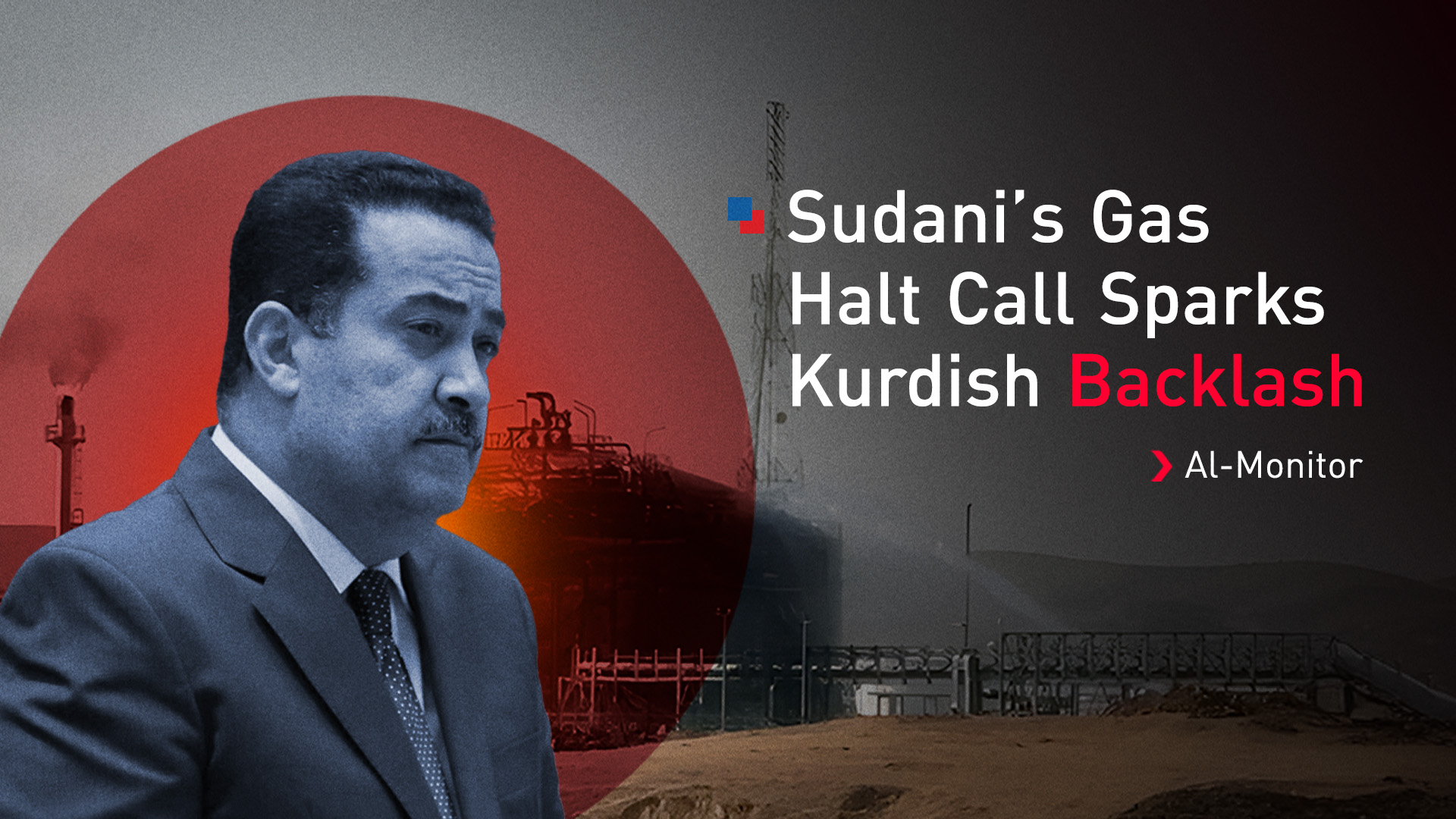
ERBIL (Kurdistan24) – A new and volatile rift has opened between the Kurdistan Regional Government (KRG) and the federal government in Baghdad, triggered by a controversial directive from Iraqi Prime Minister Mohammed Shia al-Sudani that Kurdish officials have described as an attempt at "complete strangulation" of the region's economy, as per Al-Monitor's recent report on Monday.
Following a devastating rocket attack on the Khor Mor gas field late last month, Iraq's Prime Minister Mohammed Shia al-Sudani reportedly instructed Dana Gas, the field's operator, to keep production offline pending the conclusion of a federal investigation.
This order, which would have plunged millions of citizens into darkness and crippled critical infrastructure, was flatly rejected by the KRG leadership, sparking a furious diplomatic standoff that threatens to derail ongoing government formation talks in Baghdad.
According to a detailed report by Al-Monitor, tensions escalated dramatically last week after Baghdad formed a ministerial committee to investigate the November 26 attack on the facility.
Al-Sudani's directive to pause operations until the committee finished its work was issued without a clear rationale, according to well-placed sources. The committee was given a 72-hour deadline to release its findings, but that window has passed with no public results.
The KRG, already locked in disputes with the federal government over oil revenues and budget allocations, viewed the order as an existential threat.
"We were shocked at al-Sudani’s audacity. Imagine the state we would have been in had he gotten his way," a senior Iraqi Kurdish official told Al-Monitor on condition of anonymity.
The KRG refused to comply with the federal instruction, prioritizing the immediate needs of its population. Gas production has since resumed, restoring power to some 6 million residents of the Kurdistan Region.
However, the political damage is severe. The incident has cast a long shadow over the intense negotiations currently underway in Baghdad following the November 11 parliamentary elections.
Kurdistan Region's Prime Minister Masrour Barzani’s Kurdistan Democratic Party (KDP) emerged as a kingmaker in these talks, securing over a million votes—the highest of any single party—and 27 seats.
While al-Sudani’s Iran-backed Coordination Framework coalition won 46 seats, his path to a second term is widely viewed as unattainable without Kurdish support — a prospect now jeopardized by his handling of the Khor Mor crisis, according to Al-Monitor.
The attack itself was a sophisticated strike on one of the region's most vital economic arteries.
As reported by Kurdistan24, investigations revealed that the assault was carried out using a 122 mm Grad missile launched from a distance of approximately three kilometers.
The projectile struck a condensate storage tank at the Khor Mor field, sparking a massive fire and necessitating an immediate shutdown.
A drone was also launched toward the site but crashed outside the perimeter. The shutdown resulted in an 80 percent drop in the region’s electricity production and caused a loss of 1,200 megawatts to the national Iraqi grid, highlighting the field's strategic importance to the entire country.
While no group has claimed responsibility, the consensus among security officials and international observers is that the attack was orchestrated by Iran-backed Shia militias operating outside state control.
These groups have frequently targeted energy assets in the Kurdistan Region to exert political pressure. The attack on Khor Mor marks the eleventh such strike on the facility in recent years and follows a series of drone attacks in July that cut oil production by 220,000 barrels per day.
The United States has weighed in heavily on the crisis, signaling a potential shift in policy under the Trump administration.
Mark Savaya, the new U.S. envoy to Iraq and a close associate of President Donald Trump, issued a blistering condemnation of the attack and the militias behind it.
"The Government of Iraq must identify those responsible for this assault and bring them to justice. Let it be unequivocal: there is no place for such armed groups in a fully sovereign Iraq," Savaya wrote on X.
He warned that the U.S. would not deal with a government beholden to Iran's proxies and pledged full support to track and hold accountable "every illegal armed group and supporter."
Armed groups operating illegally and driven by hostile foreign agendas carried out an attack yesterday on the Khor Mor gas field.
— Mark Savaya (@Mark_Savaya) November 27, 2025
The Government of Iraq must identify those responsible for this assault and bring them to justice. Let it be unequivocal: there is no place for such…
In an exclusive interview with Kurdistan24 on Thursday, the KRG Representative to the United States, Treefa Aziz, amplified these calls for action.
Welcoming the strong stance from Washington, Aziz urged the U.S. to expedite the delivery of anti-drone systems to the Kurdistan Region.
"One of the most important ways that they can support us is to expedite the delivery of anti-drone equipment to the Kurdistan Region so that we can protect ourselves, our facilities, and the millions of people that live in our region," she said. Aziz emphasized that the Trump administration has been clear in its communication with Baghdad: militias must be disarmed.
The geopolitical context of the standoff is further complicated by Iran's waning but still potent influence.
Despite suffering setbacks over the past year, Tehran remains deeply opposed to the Kurdistan Region becoming a stable, independent source of energy for Iraq.
Currently, Iraq relies heavily on Iranian gas imports for its electricity, a dependency that gives Tehran significant leverage. Any move by the KRG to supply the national grid weakens this grip.
The senior Kurdish official speaking to Al-Monitor described al-Sudani’s attempt to halt production as part of a campaign for "complete strangulation" aimed at restoring centralized control over the autonomous region.
On the ground, high-level federal officials, including Interior Minister Abdul Amir al-Shammari and intelligence chief Hamid al-Shatri, visited the site last Friday to inspect the damage.
Their presence underscores not only the gravity of the situation but also the political rivalries surrounding government formation.
As Al-Monitor reports, both Shatri and National Security Adviser Qasim al-Araji are viewed as potential contenders for the premiership. Araji, in particular, has strained relations with al-Sudani yet enjoys strong ties with the KDP, adding another layer of complexity to the unfolding political landscape.
Prime Minister Masrour Barzani has remained defiant throughout the crisis.
In a forceful statement released Saturday, he condemned the "cowardly, inhumane acts" of adversaries who "could not fathom the progress of the Kurdistan Region."
He pledged that the KRG would not be deterred and urged the federal government to ensure that the perpetrators face justice "to the full extent of the law."
PM Barzani warned that Iraq cannot attract investment or achieve stability as long as "militias, mafias, the corrupt, and armed groups outside of the state’s control willingly bomb national infrastructure at zero cost."
As gas flows resume and the lights come back on in Erbil and Sulaimani, the political darkness in Baghdad is deepening.
The clash over Khor Mor has exposed the fragility of the relationship between the federal and regional governments and hardened the resolve of Kurdish leaders to demand security guarantees and constitutional rights before endorsing any candidate for the Iraqi premiership.
With the U.S. signaling a tougher stance on Iranian proxies and the KDP holding the keys to the next government, the coming weeks will determine whether Iraq moves toward stability or further fragmentation.