Syria’s Army Pushes Into Kurdish-Run North as Diplomatic Efforts Intensify in Erbil
Military advances follow stalled integration deal despite first-ever recognition of Kurdish language and identity.
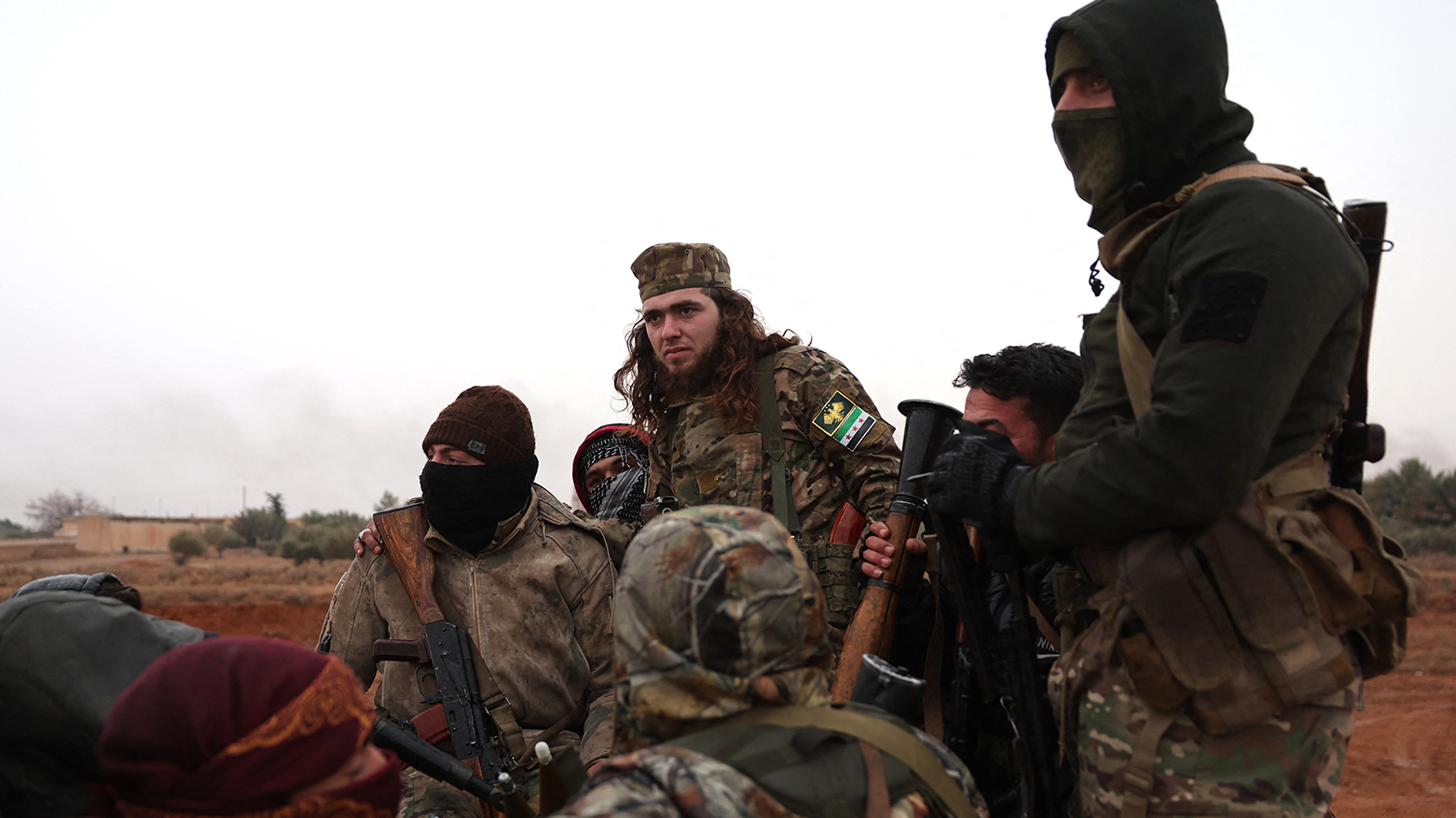
ERBIL (Kurdistan24) — Syrian government forces have taken control of large swathes of northern Syria, dislodging Kurdish-led forces from territory they had administered with effective autonomy for more than a decade, in a major escalation that has unfolded alongside limited political concessions from Damascus.
The advance came days after President Ahmed al-Sharaa issued a landmark decree formally recognizing Kurds as an integral component of Syria and designating Kurdish a “national language.” While unprecedented, Kurdish authorities said the move fell short of their aspirations, particularly demands for constitutional recognition and self-governance.
The army’s push followed the stalling of a March agreement intended to integrate the Kurdish-led Syrian Democratic Forces (SDF) into state institutions. Government troops last week drove Kurdish fighters from two Aleppo neighborhoods and on Saturday seized territory east of the city. On Sunday, Damascus announced it had captured the strategic city of Tabqa in the Raqqa countryside.
“The Syrian army controls the strategic city of Tabqa in the Raqqa countryside, including the Euphrates Dam, which is the largest dam in Syria,” Information Minister Hamza Almustafa said, according to the state-run SANA news agency.
An AFP correspondent in Deir Hafer, around 50 kilometers east of Aleppo, reported seeing SDF fighters withdrawing from the town as residents returned under a heavy army presence. Syria’s military said four of its soldiers were killed, while Kurdish forces reported several of their fighters dead, with both sides accusing the other of violating withdrawal agreements.
As government forces advanced, Syrian state media reported that Kurdish-led fighters destroyed key infrastructure in the Raqqa region. SANA said Sunday that the SDF detonated two main bridges over the Euphrates River as government troops pushed into Kurdish-held territory for the first time in more than a decade.
“The SDF organization detonated the new ‘Alrashid’ bridge in Raqqa city,” SANA reported, quoting the Raqqa information directorate. The agency said earlier that Kurdish fighters had also blown up another bridge leading into the city.
Kurdish authorities imposed a curfew across the Raqqa region after the army declared a swathe of territory southwest of the Euphrates a “closed military zone,” warning it would target what it described as military sites. Raqqa city’s water supply was also reportedly cut, with the city’s media directorate accusing the SDF of sabotaging main water pipelines.
In Deir Ezzor province, Governor Ghassan Alsayed Ahmed accused the SDF of firing rocket projectiles at neighborhoods in government-controlled areas of Deir Ezzor city, Al-Mayadeen, and surrounding towns.
The SDF rejected the allegations, saying instead that factions affiliated with Damascus attacked its positions in several towns along the Euphrates’ eastern bank between Deir Ezzor and the Iraqi border, triggering ongoing clashes.
On Friday, SDF commander Mazloum Abdi had pledged to redeploy his forces from areas west of the Euphrates, including outside Aleppo. However, the SDF said Saturday that Damascus had “violated recent agreements and betrayed our forces,” with clashes erupting south of Tabqa. The Syrian army urged the SDF to “immediately fulfill its announced commitments and fully withdraw” east of the river.
The SDF controls large parts of Syria’s oil-rich north and northeast, territories it captured during the civil war and the fight against the Islamic State group.
International concern mounted as the fighting intensified. US envoy Tom Barrack met Abdi in Erbil on Saturday, while US Central Command urged Syrian government forces to halt offensive actions between Aleppo and al-Tabqa. French President Emmanuel Macron and Kurdistan Region President Nechirvan Barzani also called for de-escalation and an immediate ceasefire.
Separately, on Saturday, the leader of the Kurdistan Democratic Party (KDP), President Masoud Barzani, hosted a high-level meeting in Pirmam, near Erbil, bringing together senior US and Kurdish officials, including U.S. Special Envoy to Syria Tom Barrack, US Consul General Wendy Green, US forces commander in Syria General Kevin Lambert, SDF commander Abdi, and Kurdish National Council of Syria (KNCS) President Mohammed Ismail.
Participants emphasized dialogue, coexistence, and coordinated international engagement as essential to preventing further escalation and advancing stability in Syria.
President Sharaa’s decree on Friday marked the first formal recognition of Kurdish rights since Syria’s independence in 1946, granting nationality to Kurds stripped of citizenship under a controversial 1962 census and acknowledging decades of marginalization. Kurdish officials welcomed the move as symbolic but insufficient.
In Qamishli, a resident told AFP that Kurds want constitutional recognition of their rights, while analysts cautioned that the decree offers cultural concessions even as Damascus consolidates military control.
“It does not address the northeast’s calls for self-governance,” said Nanar Hawach, a senior Syria analyst at the International Crisis Group.
Meanwhile, the US military said Saturday that a strike in northwest Syria killed a militant linked to last month’s deadly attack on three Americans, highlighting the fragile and complex security environment as Syria’s conflict enters a new phase.