Bahçeli Says Türkiye Peace Process Nearing Reality
Devlet Bahçeli said Türkiye's peace process with the PKK is nearing realization, proposing a formal coordination role for Abdullah Öcalan as Ankara advances disarmament talks, though Kurdish political figures and PKK commanders continue warning of stalled negotiations and unresolved legal guarantees
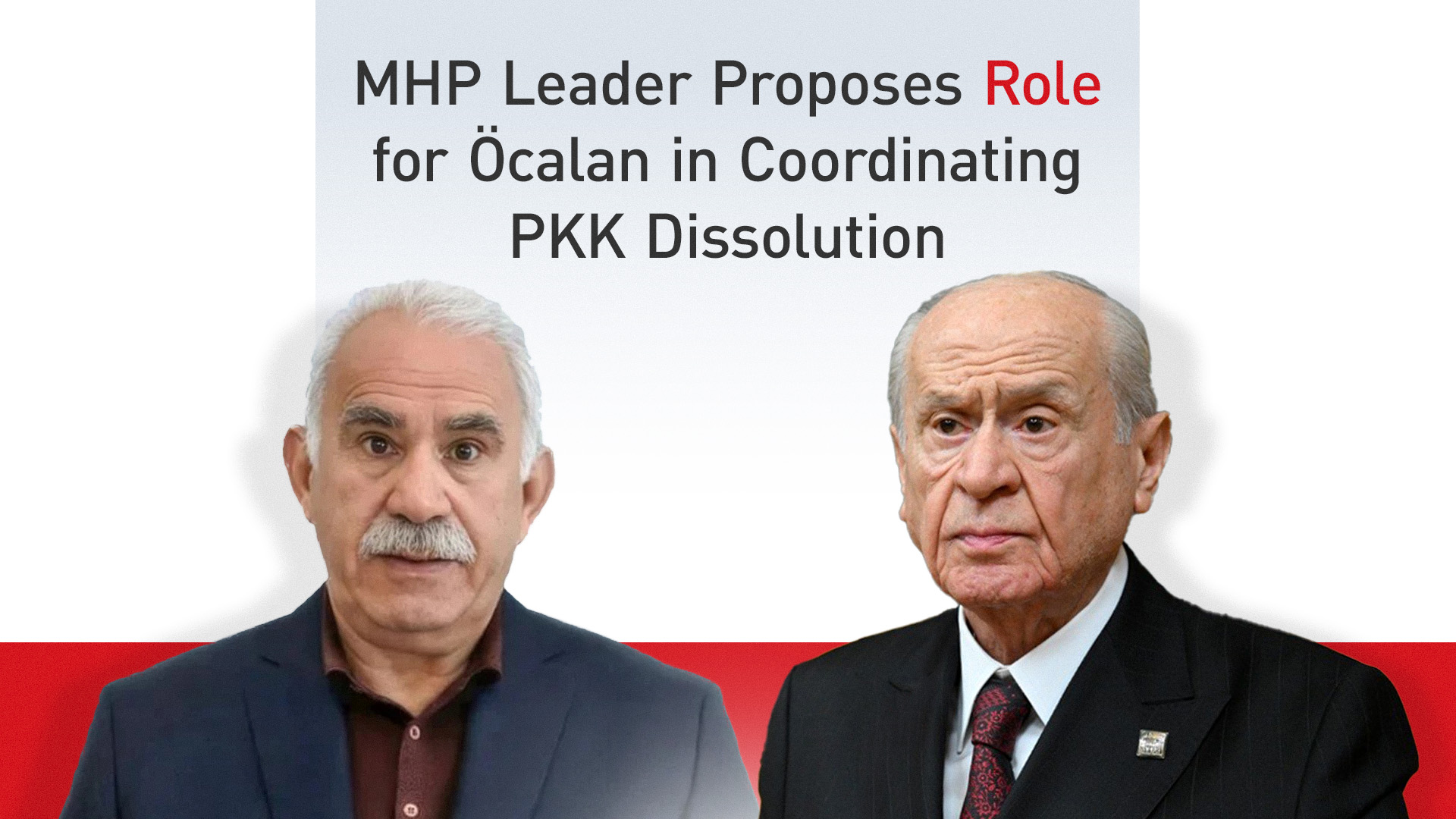
ERBIL (Kurdistan24) - Devlet Bahçeli, the Chairman of the Nationalist Movement Party (MHP), stated that the ongoing peace process in Türkiye is nearing realization, offering new structural proposals to finalize the disarmament of the Kurdistan Workers' Party (PKK).
Bahçeli's comments reflect the ongoing political calibration required to navigate a sensitive initiative that has exposed deep divisions over the pace and direction of negotiations.
The MHP leader's intervention occurs as political actors and armed group commanders offer sharply contrasting assessments regarding the status of the settlement.
While Bahçeli and Turkish government officials express optimism about the process, representatives from the Peoples' Equality and Democracy Party (DEM Party) and PKK commanders have publicly questioned the momentum of the talks, citing stalled communications and a lack of legislative progress.
The core of the current political environment centers on the contested nature of the peace process itself.
The differing assessments highlight that while the framework for disarmament and dialogue exists, its implementation remains highly sensitive.
Discussions surrounding the reintegration of fighters, the legal mechanisms required for disarmament, and the political status of imprisoned PKK leader Abdullah Öcalan continue to generate profound friction, illustrating why the transition from armed conflict to political resolution remains politically volatile in Türkiye.
Bahçeli Signals Optimism
In an interview with the Türkgün newspaper, Bahçeli articulated a specific mechanism designed to oversee the dissolution of the PKK and formally end the armed struggle.
According to the report, Bahçeli proposed granting Abdullah Öcalan the title of "Peace Process and Political Affairs Coordinator."
The MHP leader stated that this proposal is contingent upon Öcalan's prison sentence remaining unchanged.
Bahçeli explained that the purpose of this designation is to prevent external interference and internal dissent within the armed group.
He argued that the founder of the organization must personally supervise the disarmament and total dissolution process to ensure its success.
The Türkgün report noted Bahçeli's clarification that this title would not elevate Öcalan to a representative of the Kurds or a defender of national rights, but would strictly limit his role to coordinating the end of armed hostilities.
Bahçeli stated that Türkiye has reached a critical juncture in eradicating terrorism and urged the utilization of legal and political mechanisms to strengthen domestic democracy.
Reports of Ongoing Contacts and Negotiations
The momentum of the peace process relies heavily on quiet negotiations.
According to a Kurdistan24 report, Tülay Hatimoğulları, co-chair of the DEM Party, confirmed the existence of contacts between Türkiye's National Intelligence Organization (MIT) and the PKK in Qandil.
Hatimoğulları stated that the meetings were occurring but noted that her party possessed only limited information regarding the substance of those discussions.
According to the report, Turkish media indicated that the MIT delegation had requested a roadmap from the PKK detailing its plans and demands regarding disarmament.
Hatimoğulları described the overall peace process as progressing slowly, stating it was unclear if the reported intelligence meetings would be sufficient to overcome the current stagnation.
The DEM Party co-chair emphasized that attention is currently focused on whether these negotiations will yield concrete agreements concerning the future of the initiative.
Disarmament Discussions Advance
In parallel with intelligence contacts, Turkish institutions are reportedly preparing the legislative architecture required for disarmament.
According to another Kurdistan24 report, domestic media indicated that Türkiye is drafting new legislation titled the “Social Integration and National Harmony Law Proposal.”
This draft law is reportedly designed to create a formal legal and institutional framework for the reintegration of former fighters.
The report stated that the government intends to establish a “Social Integration Monitoring and Coordination Council,” comprising representatives from the MIT, as well as the ministries of interior, defense, justice, and health.
The proposed council would be tasked with supervising the disarmament process and facilitating the return of armed members to civilian life, while also providing continuous progress reports to the Turkish parliament.
Political Divisions Persist
Despite these institutional preparations, profound disagreements persist regarding the immediate status of the peace talks.
The debate was catalyzed by statements from Murat Karayılan, a senior PKK commander, who claimed in an interview with ANF News that the process had "effectively been frozen by the government."
According to the report, Karayılan cited a lack of contact with Abdullah Öcalan for over a month as a warning sign.
He stated that the PKK had fulfilled its obligations, including declaring a ceasefire and burning weapons, and criticized the government for demanding disarmament without providing corresponding legal guarantees.
Karayılan argued that laying down arms under current Middle Eastern security conditions without a legal framework would be "irrational" and amounted to "an imposition of surrender."
Turkish President Recep Tayyip Erdoğan offered a starkly different assessment.
According to the report, Erdoğan addressed the Turkish parliament and insisted that the process remains on track.
The President acknowledged that the initiative had reached a "more sensitive stage" but dismissed pessimistic assessments as being based on "imagination and illusion, not reality."
The DEM Party positioned itself between these two narratives.
According to a separate report, DEM Party Deputy Co-Chair Mahfuz Güleryüz rejected Karayılan's assertion that the process was entirely halted.
Güleryüz stated, "We do not wish to use the expression that the process is frozen," characterizing the situation instead as a "temporary stalemate" marked by "glitches" and points of blockage.
According to the report, Güleryüz noted that declaring the process frozen runs contrary to its spirit, though he acknowledged that the lack of direct communication with Öcalan and the absence of a promised legal roadmap remain significant hurdles.
Broader Political and Regional Implications
The trajectory of the peace process carries substantial implications for Türkiye's domestic stability and regional security.
The initiative, which began in Oct. 2024 following Bahçeli's initial call, led to the formation of the "National Unity, Brotherhood, and Democracy Commission" within the Turkish Parliament to oversee legal aspects of the transition.
However, the current friction highlights the sensitivity of the negotiations.
According to the reports, Kurdish political factions continue to demand an end to the appointment of trustees over municipalities, the release of political prisoners, and the establishment of a legal status for returning PKK members.
The differing assessments between the government, the DEM Party, and PKK commanders demonstrate the deep complexities involved in transitioning from a decades-long armed struggle to a structured political settlement.
Discussions surrounding the peace process and disarmament mechanisms continue to evolve in Türkiye amid differing political assessments, ongoing intelligence contacts, and profound regional sensitivities.