Iraq’s Shiite Coordination Framework Divided Over Prime Minister Selection as Maliki Rejects Withdrawal
Internal disputes, competing claims, and regional mediation deepen uncertainty over the next government formation
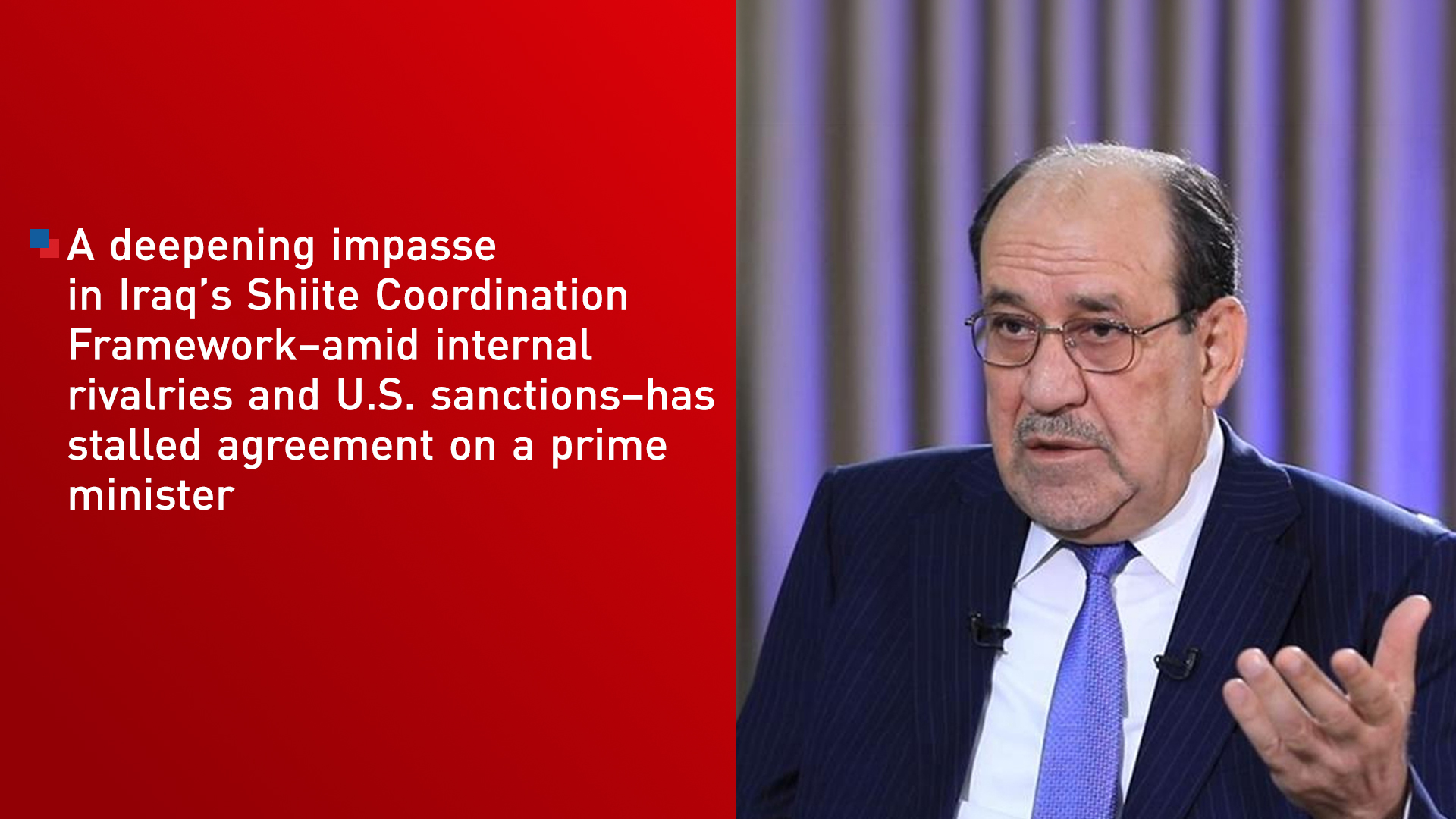
ERBIL (Kurdistan24) — Iraq’s Shiite Coordination Framework remains unable to reach consensus on a candidate for prime minister, amid deep internal divisions, conflicting narratives, and escalating political pressure both domestically and from regional actors, according to multiple sources within the alliance.
The head of Iraq’s Supreme Islamic Council, Humam Hamoudi, said on Sunday that the bloc is “very close” to finalizing its nominee, either through majority vote or consensus. However, behind-the-scenes disputes have stalled progress, with no unified agreement yet reached.
A senior source within the Coordination Framework told Kurdistan24 that tensions escalated after reports emerged that former Prime Minister Nouri al-Maliki had been approached regarding withdrawal from the race in favor of another candidate, reportedly Basim al-Badri.
According to the source, Maliki reacted angrily during a phone call, rejecting the proposal outright and denying that he had withdrawn from candidacy.
The same source said Maliki refused to attend recent meetings of the Coordination Framework, contributing to the postponement of a key session now rescheduled for Monday. The disagreement has further complicated efforts to consolidate support within the Shiite alliance.
In a statement from his media office, Maliki’s team rejected claims of political delays, insisting that the Framework’s officially announced candidate remains unchanged.
“Whoever seeks to form a government within constitutional timelines must act decisively, not delay or shift responsibility onto others,” the statement read, adding that any replacement of a candidate must follow the same majority-based mechanism used in nomination.
The statement also dismissed reports suggesting difficulty in contacting Maliki as the reason for postponing meetings, calling them “false and not reflective of reality.”
The internal rift comes as competing narratives circulate about external influence on the process. A senior source told Kurdistan24 that discussions overnight included proposals reportedly relayed through phone contacts between key political figures, including claims of signature collection efforts to replace candidates—allegations that triggered strong denials and further mistrust within the bloc.
The source also said Prime Minister Mohammed Shia al-Sudani has been engaged in calls with senior political figures, amid competing claims over candidate endorsements and coalition alignment.
In one reported exchange, disputes arose over whether certain parliamentary blocs had formally endorsed alternative nominees, with conflicting responses from involved parties.
Meanwhile, regional dynamics are also influencing the negotiations. The same source said Iran has not publicly endorsed any specific candidate but prefers a figure capable of preserving the Coordination Framework while maintaining workable external relations, including with the United States.
US officials, according to the source, have expressed a preference for a prime minister not affiliated with armed factions or strongly aligned with Iran, citing concerns over repeated attacks on diplomatic facilities and ongoing instability linked to non-state armed groups.
Washington’s position, the source added, has been made “clear and explicit” regarding Maliki’s prospects.
Esmail Qaani, head of Iran's Qods Force, reportedly visited Baghdad recently, leading a delegation to mediate internal Shiite disputes and accelerate agreement on the premiership issue.
According to sources, multiple rounds of bilateral and multilateral meetings were held with different factions within the Coordination Framework.
In parallel, Iraq’s militia landscape has also weighed in on the crisis. Kata'ib Hezbollah issued a statement late Saturday suggesting that either Maliki or al-Sudani should be selected as prime minister, or, alternatively, someone from their political blocs, warning against the monopolization of top state offices by a single faction.
The stalemate has been further exacerbated by mounting external pressure, particularly following new U.S. sanctions targeting senior figures in Iran-aligned militias. The divisions have deepened amid a sweeping sanctions package imposed by the United States Department of the Treasury under Executive Order 13224, targeting commanders from groups including Kata'ib Hezbollah, Asa'ib Ahl al-Haqq, Harakat al-Nujaba, and Kata'ib Sayyid al-Shuhada.
U.S. Treasury Secretary Scott Bessent said the measures are aimed at preventing Iran-backed militias from threatening American interests, a move analysts say has directly influenced the political calculations of key actors within the Coordination Framework—particularly amid explicit warnings from U.S. President Donald Trump, who has effectively signaled a veto against the return of Nouri al-Maliki by threatening to cut U.S. support to Iraq if he is reappointed.
Despite ongoing mediation efforts, sources acknowledge that deep internal disagreements have made consensus “extremely difficult,” leaving the Framework’s Monday meeting as a critical—though uncertain—attempt to resolve the impasse.
For now, Iraq’s next government remains unresolved, as competing political interests, external pressures, and internal rivalries continue to shape one of the most consequential decisions in the country’s post-election political process.